
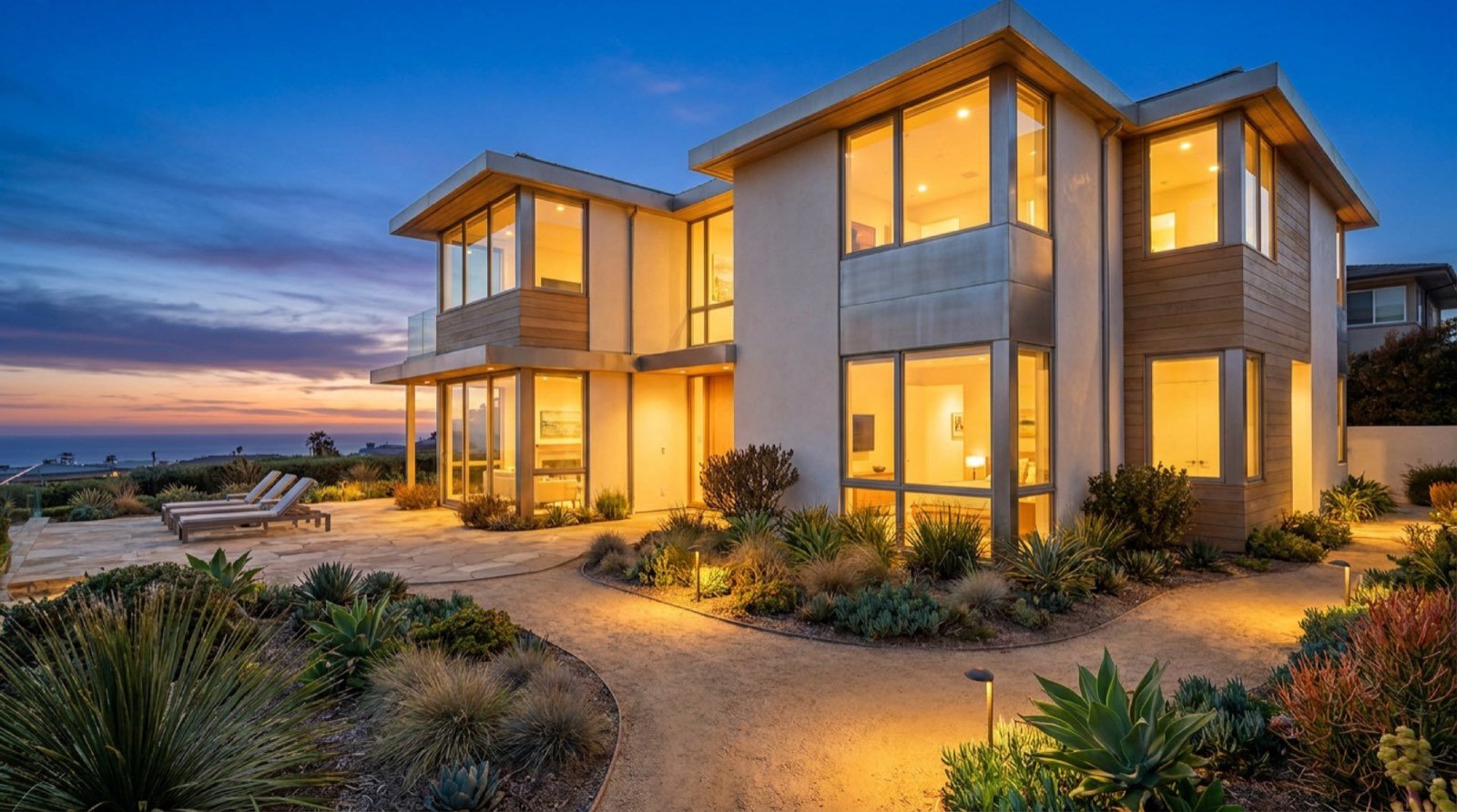
There’s a reason coastal San Diego homes are so coveted — and a reason they’re so demanding to maintain. The same ocean breeze that makes La Jolla, Del Mar, and Pacific Beach extraordinary also carries microscopic salt particles that settle on every surface, accelerating corrosion, fading, and wear. Pair that with marine humidity and intense sun, and ordinary materials can look tired within a few years.
The good news: choose the right materials from the start, and a coastal remodel can be both stunning and remarkably low-maintenance. Here is how we think about specifying for homes near the water.
Why salt air is so destructive
Salt is hygroscopic — it pulls moisture from the air and holds it against whatever it lands on. On metal, that trapped moisture drives oxidation and rust. On wood and paint, it accelerates breakdown. The closer the home sits to the surf, the faster the effect, which is why a material that performs fine inland can fail quickly on a bluff in Bird Rock or a beachfront street in Coronado.
Metals and hardware: go marine-grade
Fixtures and hardware are usually the first things to show coastal wear, so this is where upgrading pays off most. The cost difference is modest; the difference in longevity is dramatic.
- 316 marine-grade stainless steel — meaningfully more corrosion-resistant than the standard 304 alloy.
- Solid brass and bronze — naturally salt-tolerant, and they patina gracefully instead of pitting.
- Powder-coated aluminum for railings and exterior fixtures.
- Skip chrome-plated or zinc hardware near the coast — it pits and rusts quickly.
Exterior surfaces and siding
The building envelope takes the brunt of the marine environment, so durability here protects everything inside it. We lean toward surfaces that shrug off salt, moisture, and sun — the same thinking that drives our siding and roofing work.
- Fiber-cement siding — resists moisture, rot, and warping.
- Stucco with quality elastomeric coatings — flexible and weather-tight.
- Porcelain and natural stone for patios and entries.
- Composite or properly sealed hardwood decking rated for coastal exposure — the backbone of a deck that lasts.
Windows, doors, and glass: three different jobs
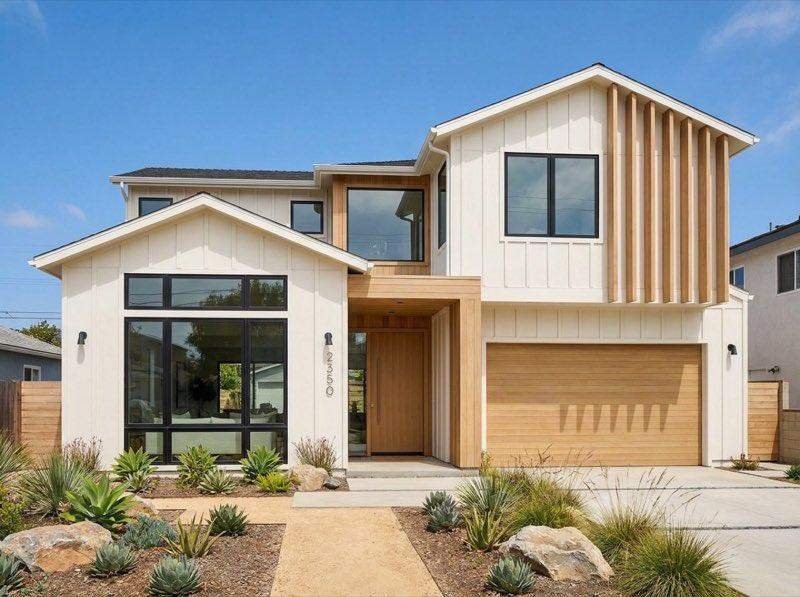
Coastal homes live for light and views, but the openings that deliver them are the most vulnerable part of the envelope. Three separate decisions matter here, and they are often confused with one another.
Frames and hardware fight corrosion. Fiberglass and high-quality vinyl frames outperform bare aluminum and untreated wood near the water, resisting both corrosion and warping. Specify hinges, locks, and weatherstripping in marine-grade stainless or brass, and the whole assembly ages together instead of failing at its weakest point.
Low-E coatings handle sun and heat. If the goal is protecting interiors from UV fading and cutting solar heat gain, the answer is low-emissivity (low-E) glass: microscopically thin metal-oxide layers that reflect solar radiation while still letting daylight through. On a west-facing wall of glass in Del Mar, low-E glazing is the difference between a room you live in and a room you avoid every afternoon — and it trims cooling bills year-round.
Impact-rated glazing is a different job entirely. Impact-rated (laminated) glass — two panes of glass sandwiching a tough interlayer — is structural protection: it is designed to keep windborne debris from breaching the window during severe storms, and it adds security and sound-dampening as a bonus. What it does not do is manage UV or heat; that is the coating’s job, and a low-E coating does not change a window’s impact rating either. In San Diego’s climate, impact glazing is a worthwhile option for exposed sites or security-minded owners — not a substitute for low-E.
Interior finishes that hold up
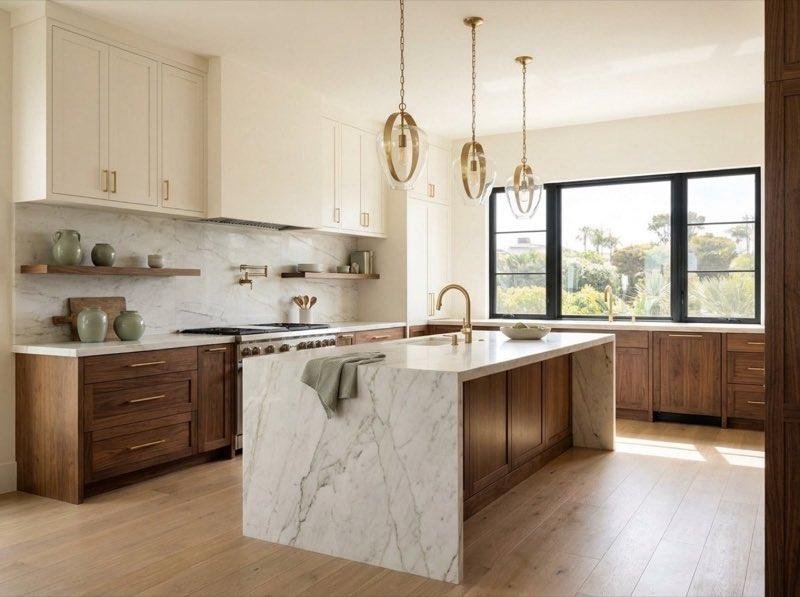
Even indoors, coastal humidity finds its way in. These are the surfaces we reach for in kitchens, baths, and laundry rooms near the water — the rooms at the heart of most whole-home remodels.
- Porcelain tile that convincingly mimics wood or stone, with none of the upkeep.
- Quartz countertops — non-porous and unfazed by humidity.
- Marine-grade plywood cabinet boxes in moisture-prone rooms.
- Mildew-resistant paints in satin or semi-gloss for kitchens and baths.
Ventilation is the unsung hero
No material strategy is complete without airflow. Quality exhaust fans in bathrooms and kitchens, proper attic ventilation, and good whole-home air movement keep coastal moisture from accumulating where it does damage. We treat ventilation as a core design decision, not an afterthought — it is often the difference between a finish that lasts five years and one that lasts twenty-five.
The payoff
Specifying for the coast costs a little more up front and saves a great deal over time — in repairs, repainting, and replacement. More than that, it lets you enjoy the home and the view without constantly fighting the environment. From Encinitas down the coast to Coronado, the principle holds: build for the salt air once, and it stops being part of the conversation.
Planning a project near the water? See the neighborhoods we serve on our service areas page, or tell us about your home below.